
How a red dot sight works and which dot color to choose: red, green, or gold?
Red dot sights are now the standard in modern optical solutions for precise and fast aiming. Although they seem simple, behind the small light dot there is technology that significantly affects speed, precision, and the overall feel in use.
What many do not realize at first: a red dot is not just a "different sight" — it is a completely different way of aiming.
If you are choosing your first red dot or want to understand the difference between reticle colors, it is important to start from the basics.
How a red dot sight actually works

A red dot does not use magnification. Instead, it uses an LED light source that projects a dot onto a specially coated piece of glass. The key is in the optical coating, which:
- lets light pass through towards the target
- reflects the LED dot back to your eye
That dot:
- is not physically "on the glass"
- is optically placed in the same plane as the target
- "floats" in the space in front of you
Therefore, you can:
- see the target and the dot at the same time
- keep both eyes open
- react faster without additional refocusing
Why a red dot is faster than classic sights
With classic sights you have to align the rear sight, the front sight, and the target. With a red dot — only one dot. This means less cognitive load, fewer micro-corrections, and faster decision-making.
That is exactly why a red dot gives an advantage in dynamic situations where speed matters more than perfect static precision.
Dot color: more than aesthetics
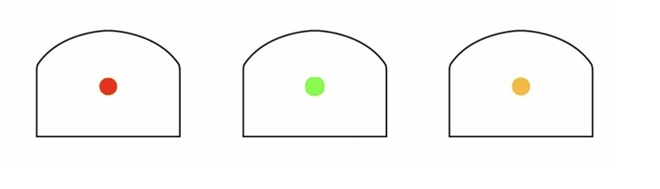
Color is not just a visual detail — it directly affects perception. It is about how the eye registers contrast, the brain recognizes the dot, and you quickly "lock" on the target.
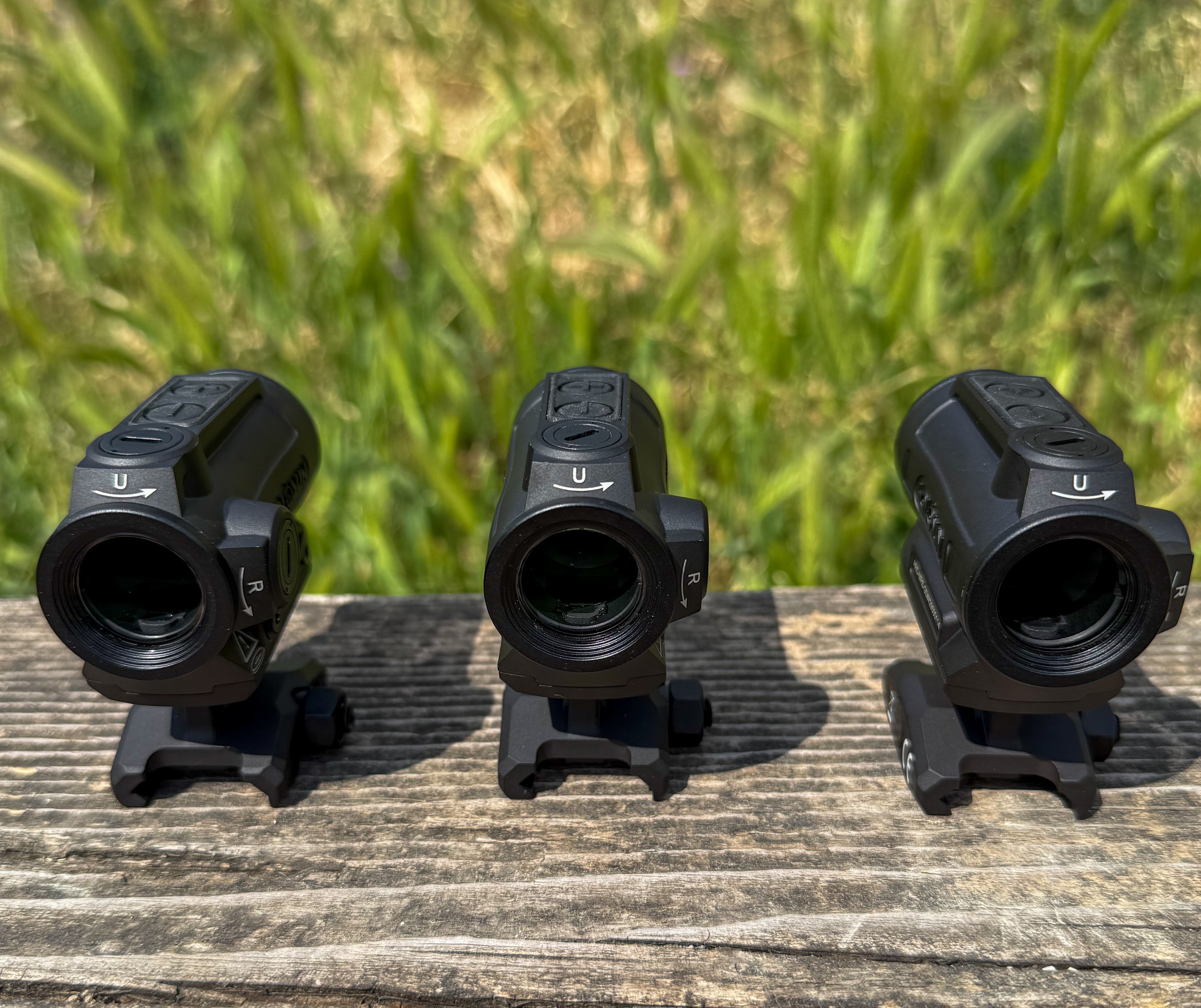
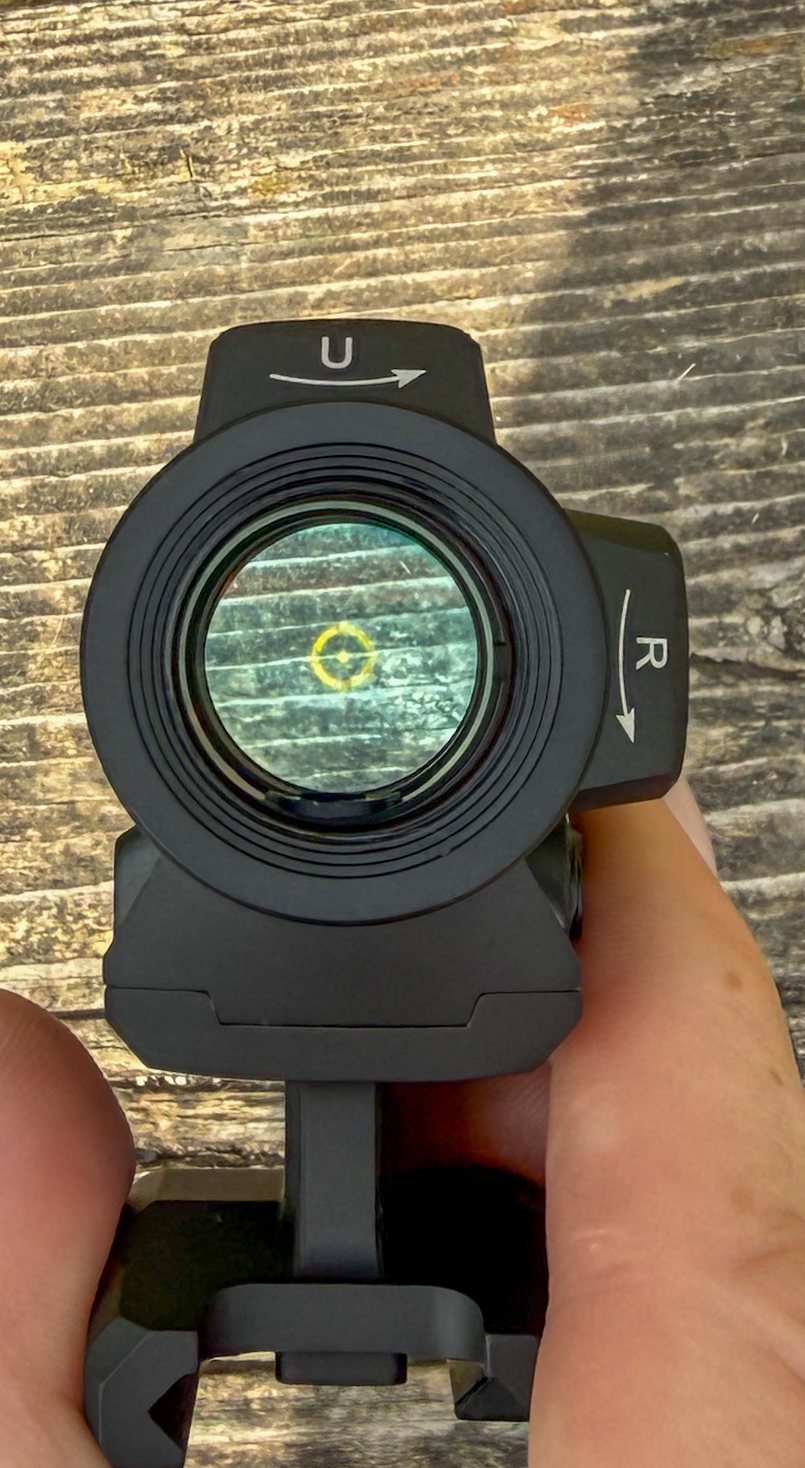
ARO-MRS series under the same conditions: ARO-MRS-GR, ARO-MRS-RD and ARO-MRS-GD
Red dot – the proven standard
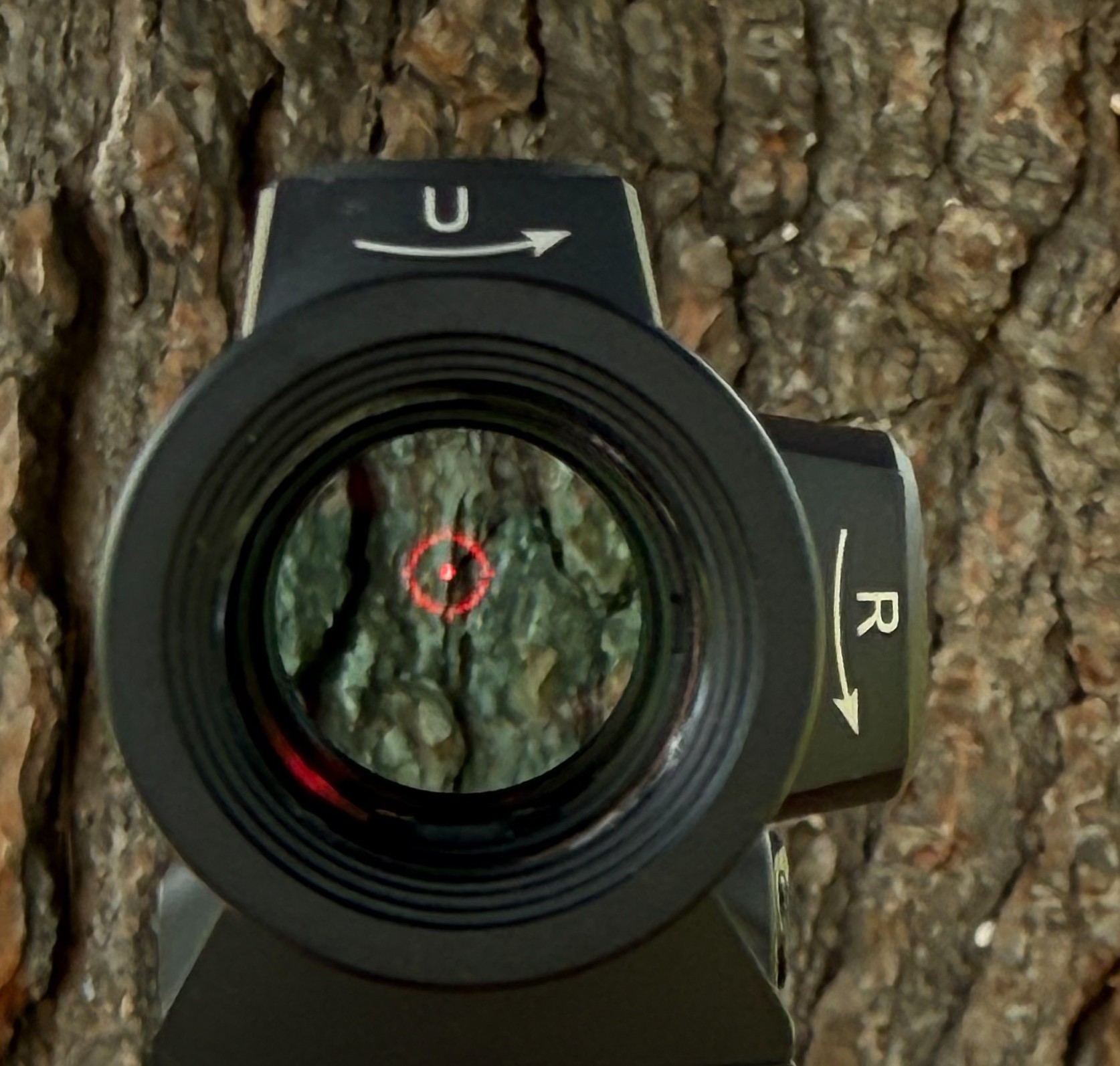
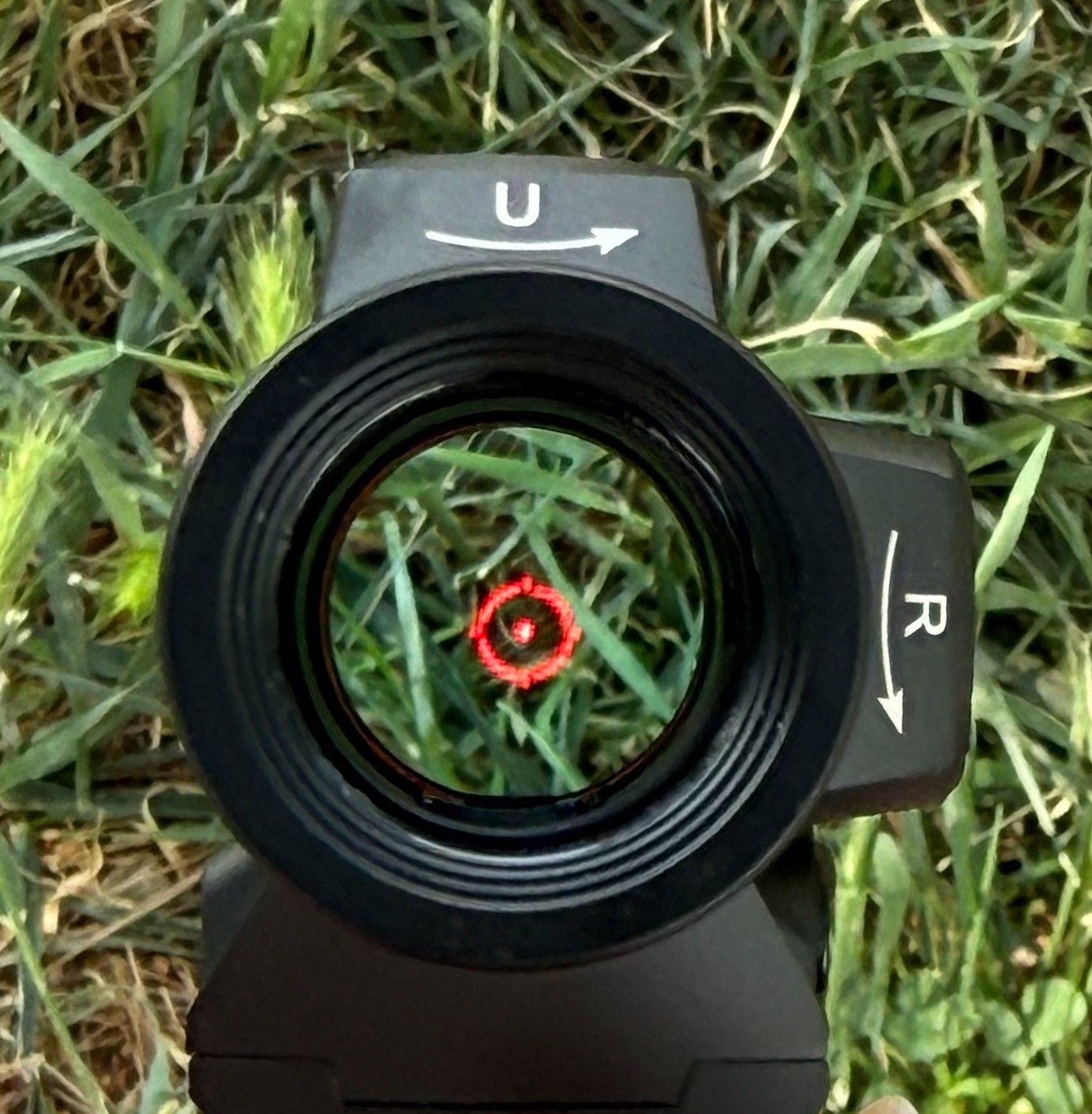
The red dot is the most widespread option and has long been the industry standard. Advantages:
- stable and predictable
- good in most conditions
- energy efficient — the red wavelength requires less power, which often means longer battery life
If you already have experience or want a familiar feel — this is a safe choice.
Green dot – the speed your eye recognizes
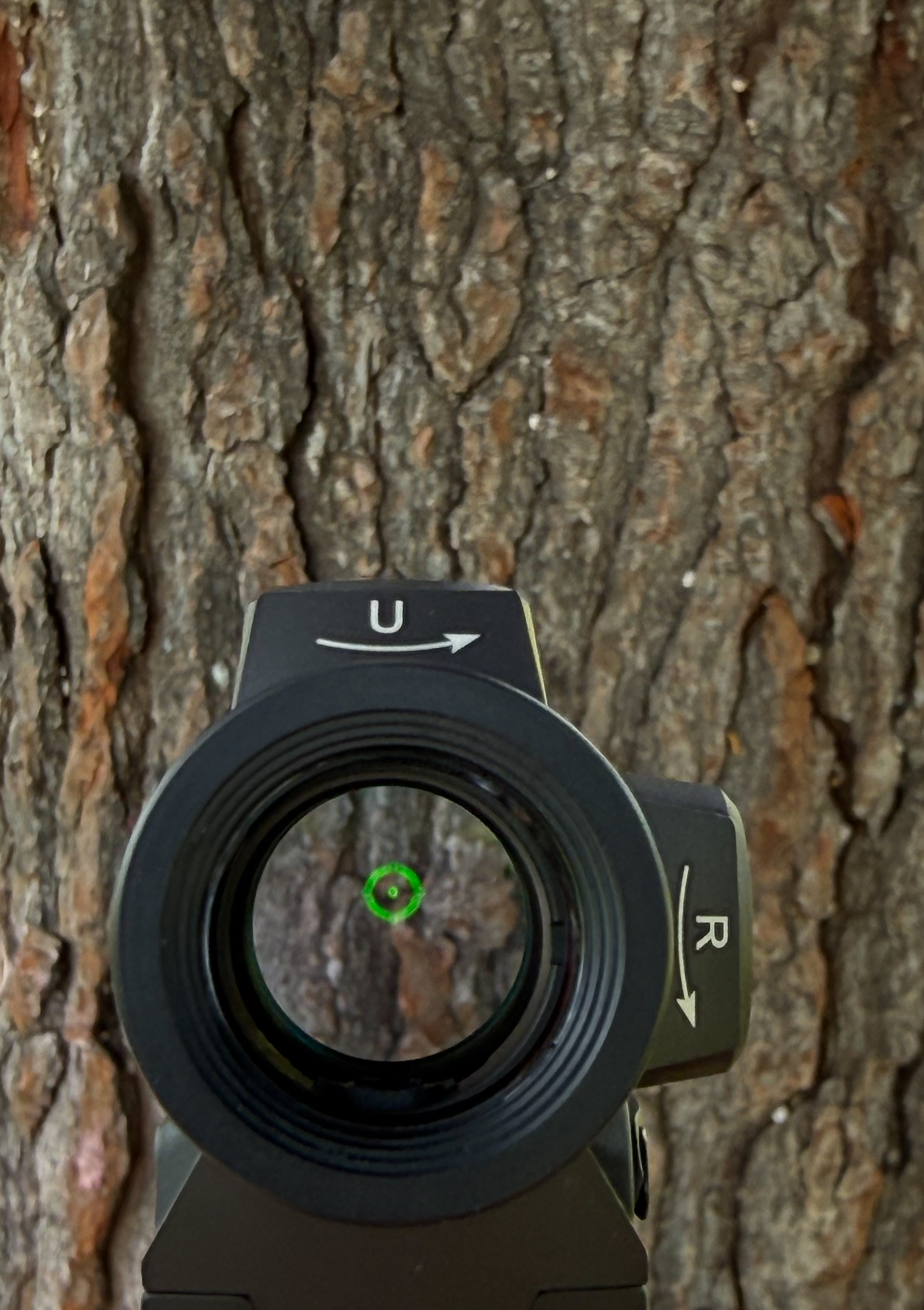
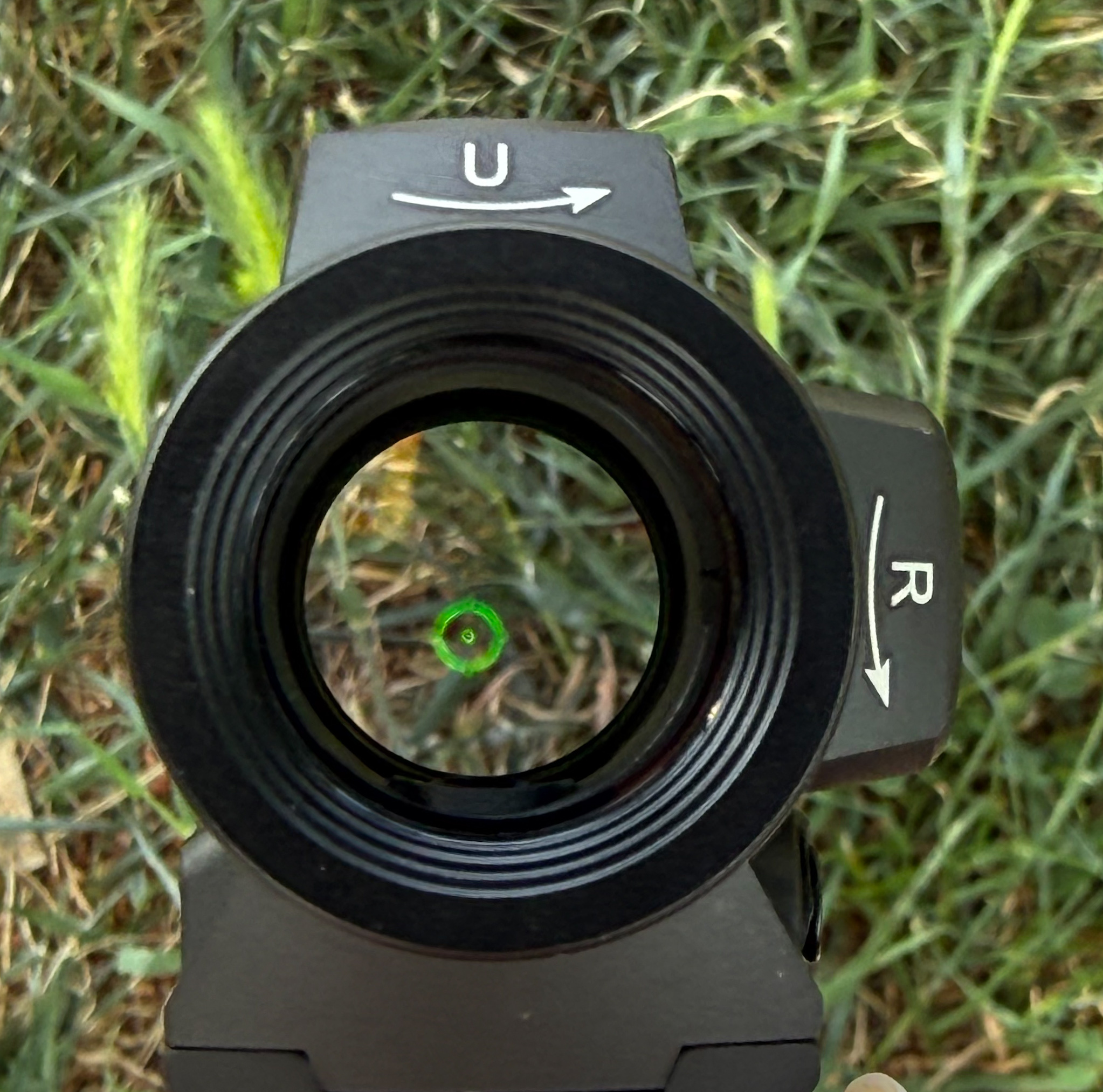
The human eye is most sensitive specifically to the green wavelength. This means that a green dot:
- appears brighter at the same power level
- has stronger contrast
- "pops out" of the background more quickly
Advantages:
- faster target acquisition
- better visibility in strong light
- less eye strain during prolonged use
- an excellent option for people with astigmatism (sharper dot/reticle)
In practice, the difference is not theoretical — you feel it immediately, especially outdoors. If you are considering a green reticle option, take a look at models such as AEMS or EPS that use this technology.
Gold dot – a specific but interesting choice
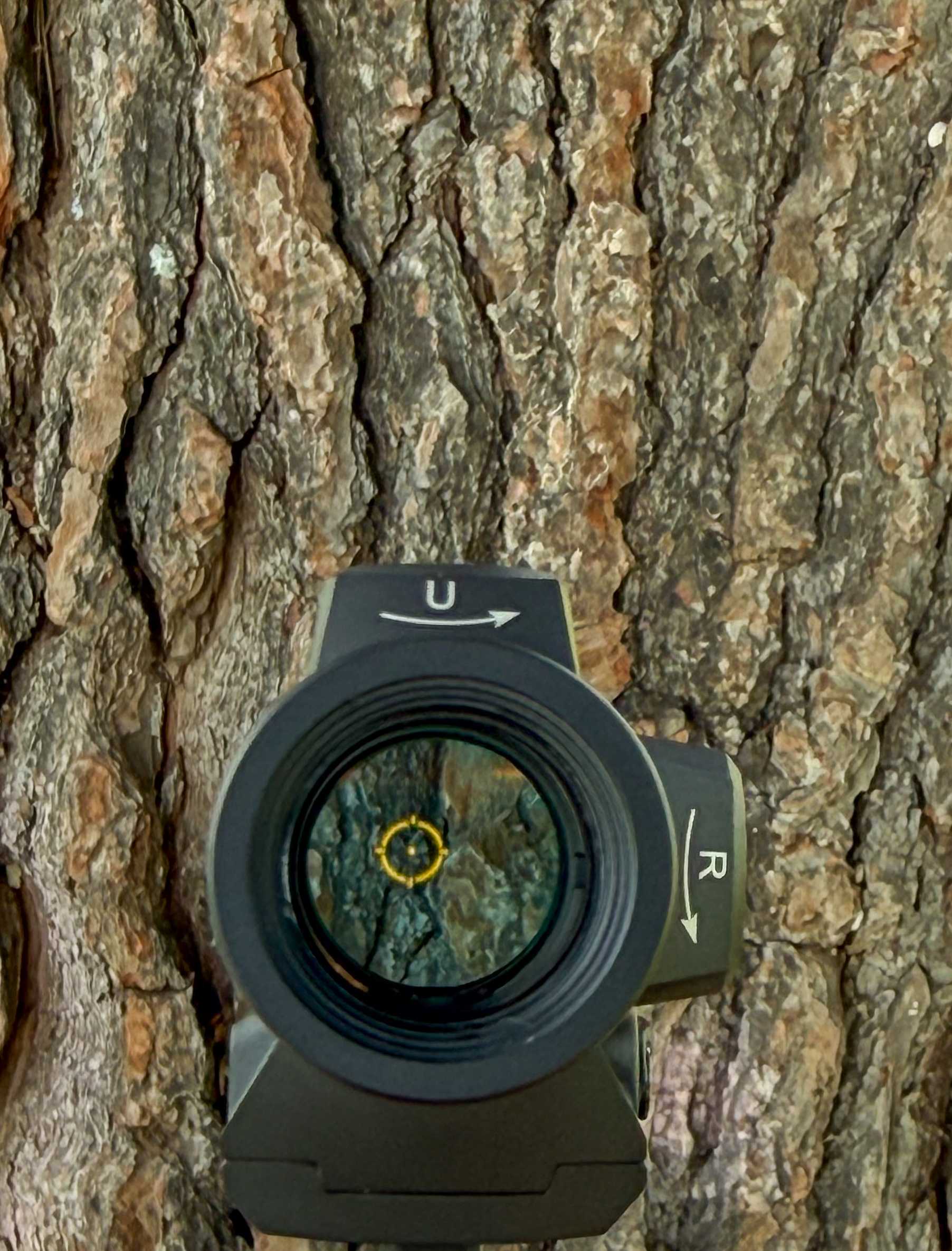
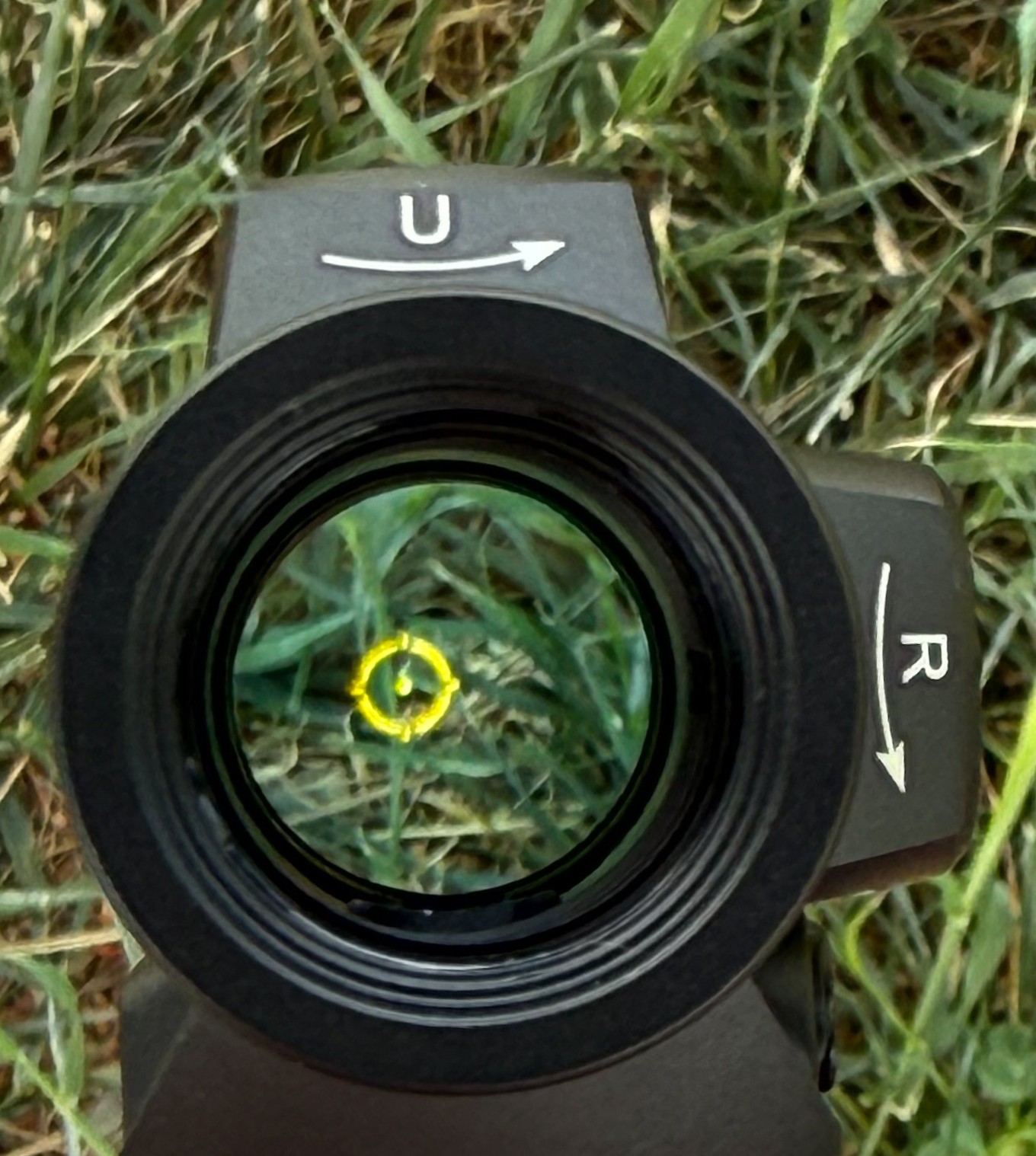
The gold (amber) dot is rarer, but not accidental. It sits between red and green — less aggressive than green and clearer than red. Advantages:
- more comfortable for sensitive eyes
- works well in natural, warm environments and urban conditions
- reduces "visual stress" for some users
It is universal — for certain users it can be ideal.
The key difference in reality
The difference between colors is not only technical — but perceptual. In practice:
- green = faster acquisition
- red = stability and familiarity
- gold = specific ergonomics and versatility
In other words: you are not just choosing technology, but the way your eye works.
How to decide – a practical algorithm
Check your vision before buying — a test on any reflex/red dot sight can reveal astigmatism in a few seconds. Looking through the red dot sight, focus your gaze on the target (on a wall, price tag), not on the dot itself. The dot should be sharp only when your focus is on the target.
- If you do not have astigmatism → reflex sight, red dot.
- If you have astigmatism → green dot, holographic sight, or prismatic sight with diopter adjustment.
- If you hunt in warm environments or have sensitive eyes → consider a gold/amber dot.
The most important rule: what feels natural to you will also be the fastest.
What matters more than color
Color is important — but not decisive. When choosing, also pay attention to:
- construction (open vs closed emitter)
- dot size (MOA)
- battery life
- durability and reliability
- additional technologies
In practice, these factors often have a greater impact than the dot color itself.
Conclusion
There is no universally best red dot — there is only the one that fits your vision, your application, and your environment. If you had to choose one rule: first test whether you have astigmatism, then choose the dot color.
For roughly one third of users who statistically have astigmatism, a green dot or a prismatic sight provides a drastically better experience than a classic red reflex model.


Callback